

Report
Activities / People
This report shows the profitability of work on the project.
Project Expenses
This report provides an overview of Project Expenses.
Activities/People Report
The project report offers a basic overview of the profitability of individual activities and team members on the project.
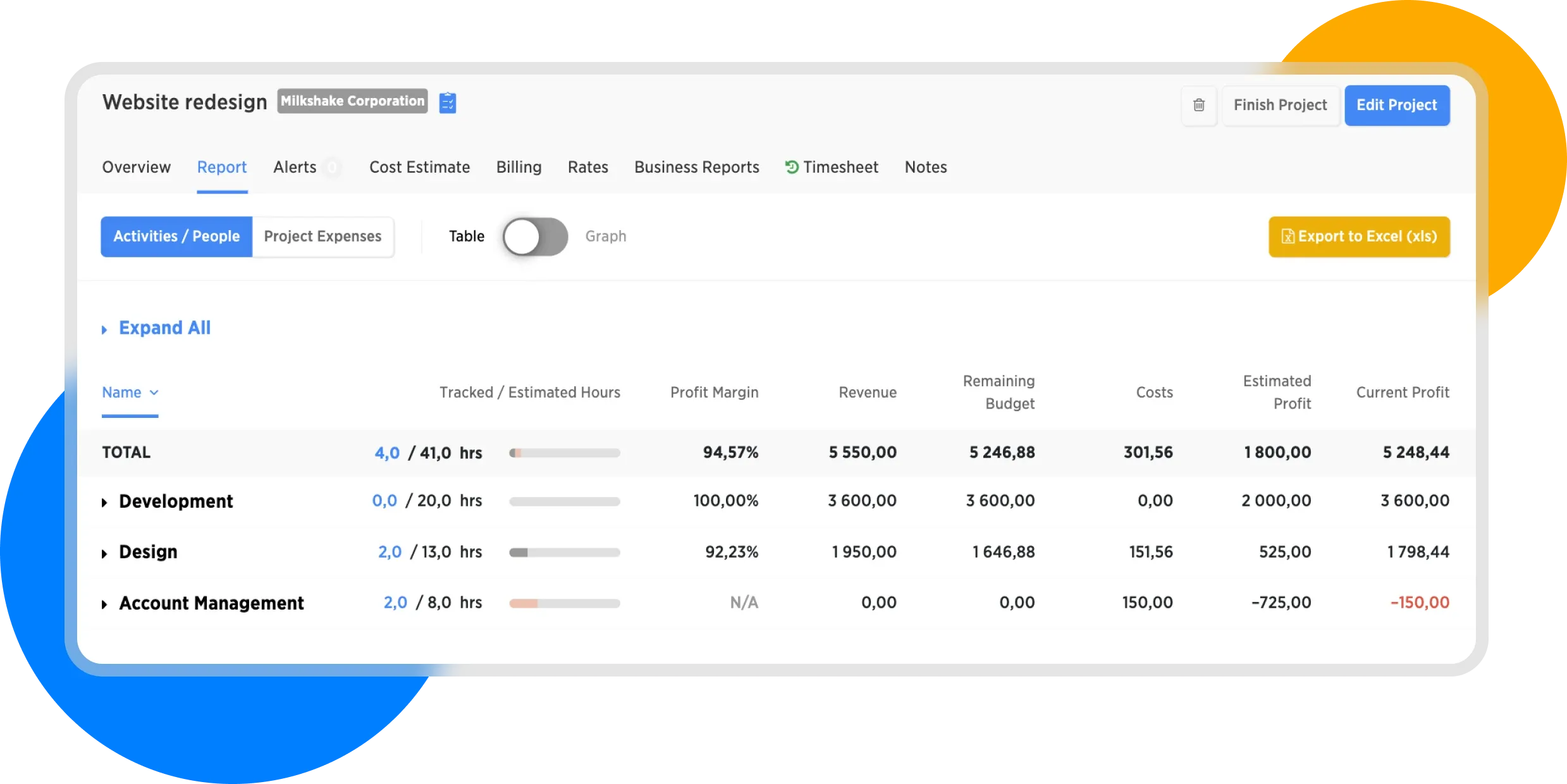
Project report
By clicking the Show All button, we can examine the numbers from our example:
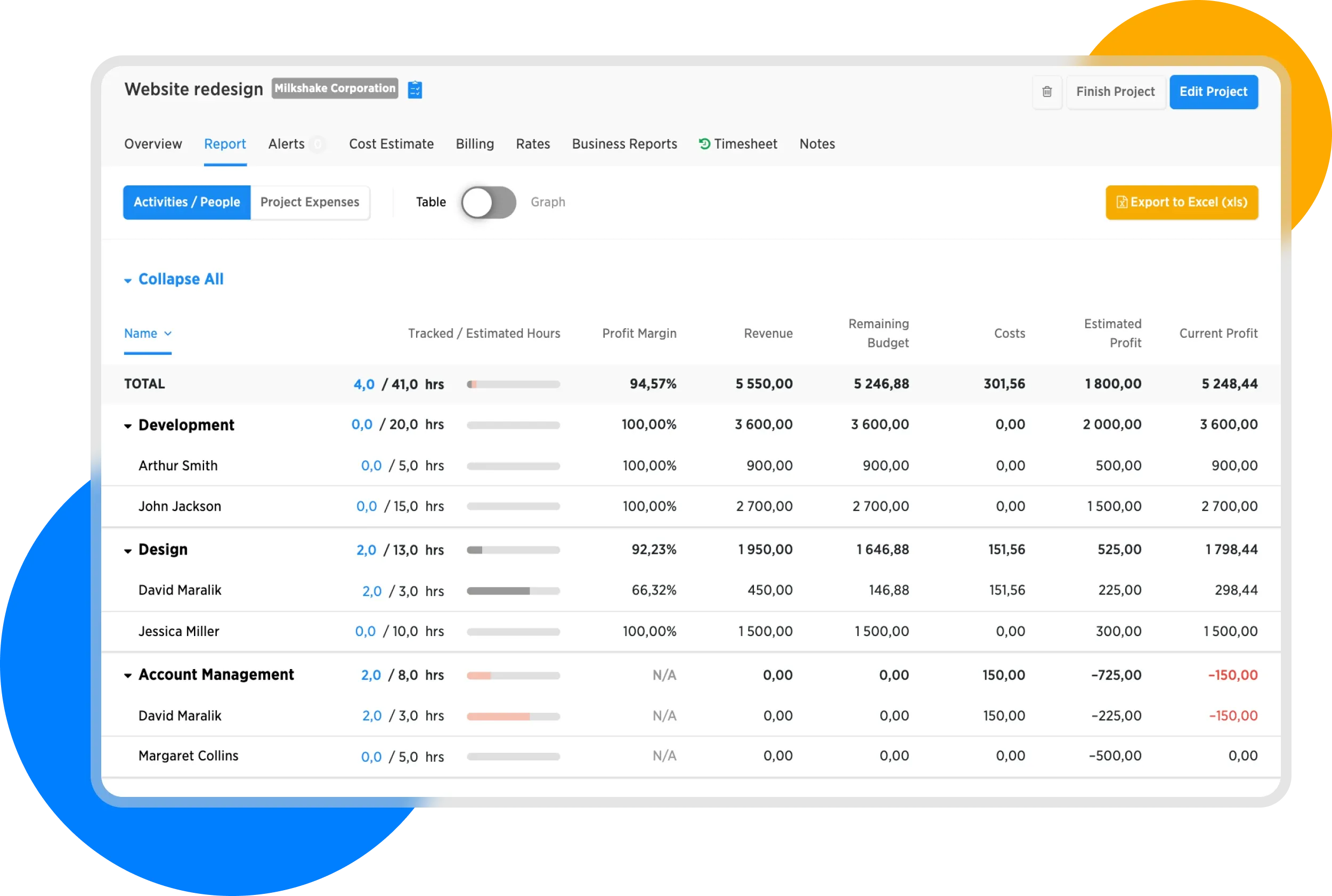
Expanded project report
Here we see that for the activity Design and the person David Maralík:
| Item | Information | Calculation | Note |
|---|---|---|---|
| Tracked Time | How many hours the person has already worked on the activity | Sum of hours for the person | See previous Time Tracking |
| Estimated Time | Time from the project budget | Set in the project budget | Creating a Project Budget |
| Revenue | Revenue for the budget item | Project hourly rate * number of hours | 150 * 3 hours |
| Remaining Budget | How much revenue we still need to earn from the client | Project hourly rate * remaining hours | 150 * 0.98 hours |
| Costs | How much the work has cost us | (Employee hourly rate + overhead cost) * number of hours worked | (751 + 02) * 2.01 = 151,56 |
| Estimated Profit | Expected profit on particular item if we work exactly the estimated hours | Revenue - (Employee hourly rate + overhead cost) * estimated number of hours | 450 - (75 * 3) |
| Current Profit | Current profit on particular item | Revenue - (Employee hourly rate + overhead cost) * number of hours worked | 150 * 3 - (75+ 0) * 2.01 |
Project Expenses Report
The Project Expenses report shows the profitability of external costs on this project.
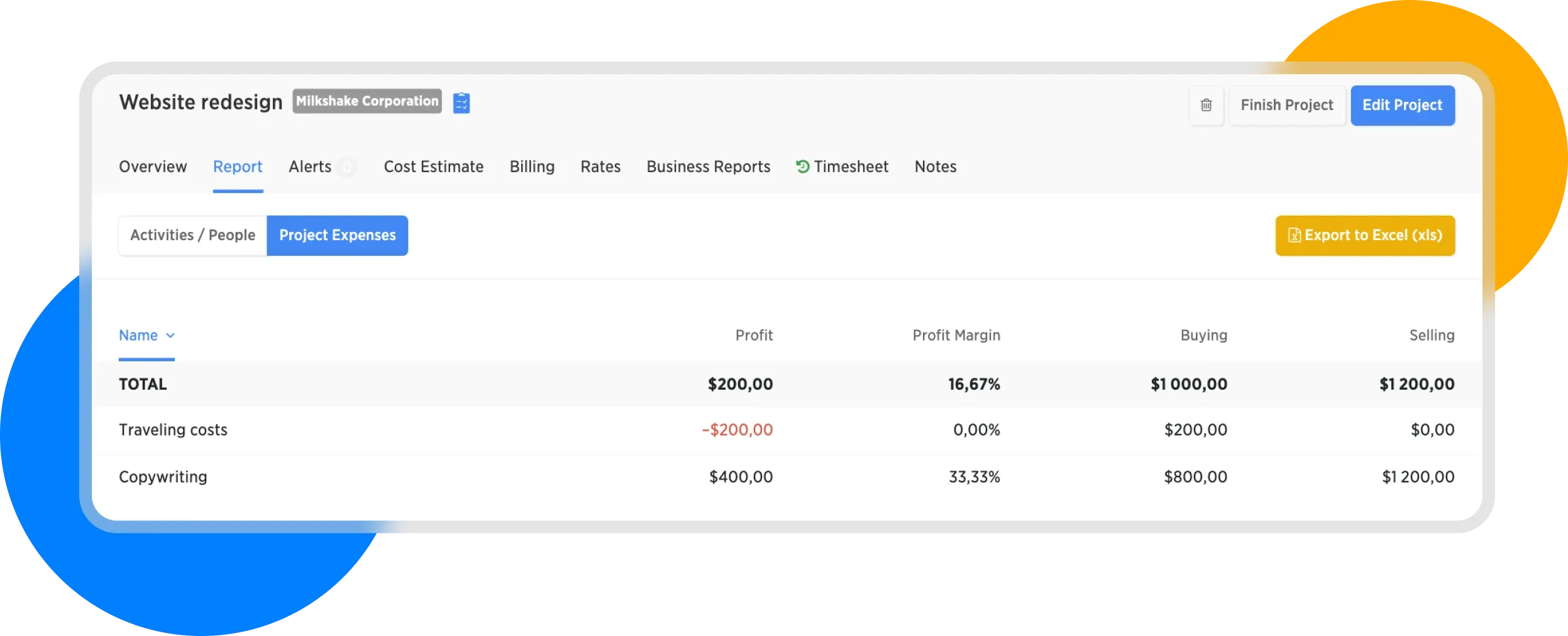
Project expenses report
This report provides an overview of external costs associated with this project. We can see the purchase and selling prices, profit, and profit margin.